Four small experiments in interfaces, nostalgia, and making data explorable. Weird things can still have a clear idea underneath them.
Editorial interface · Three.js
Gravity Well
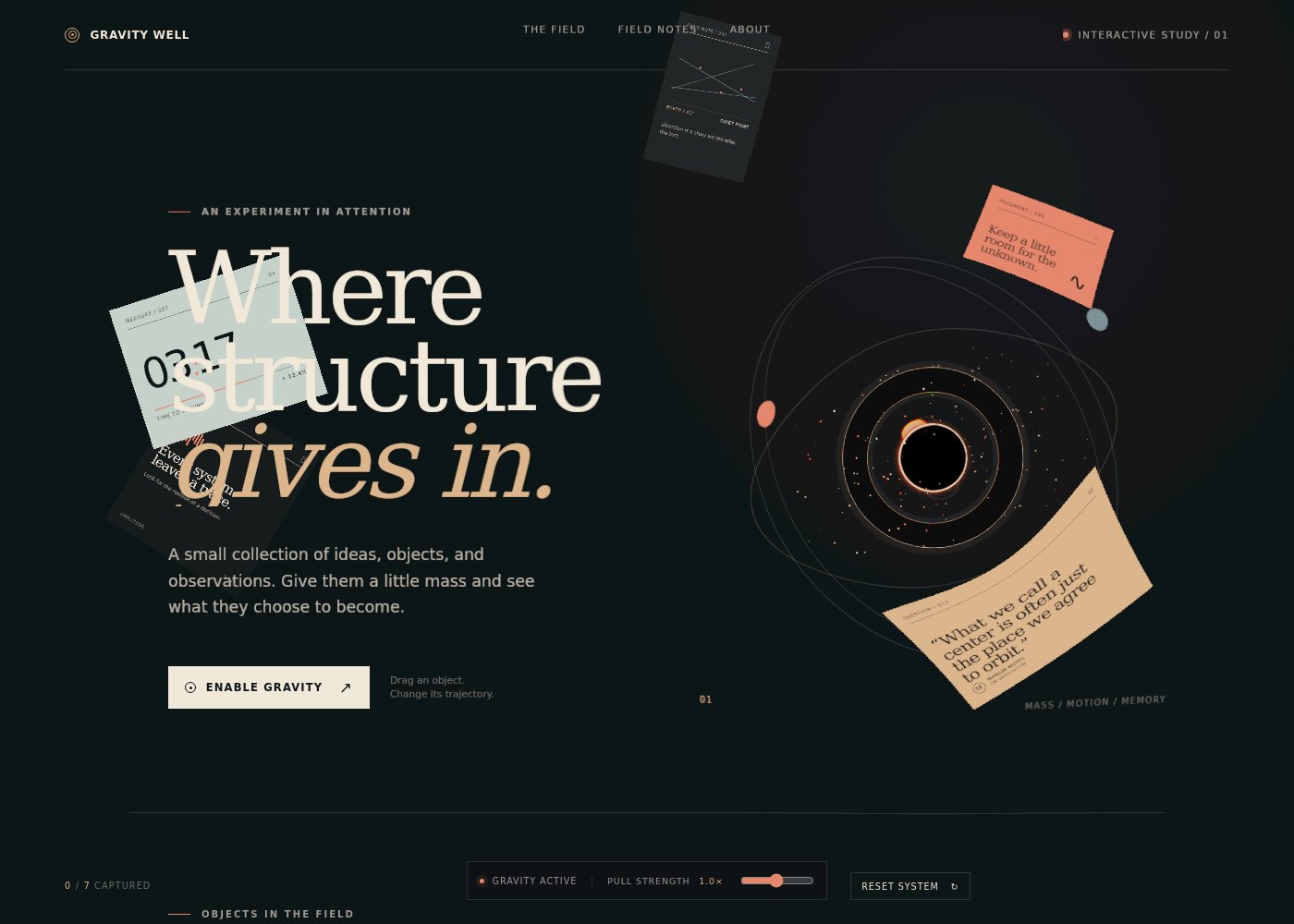
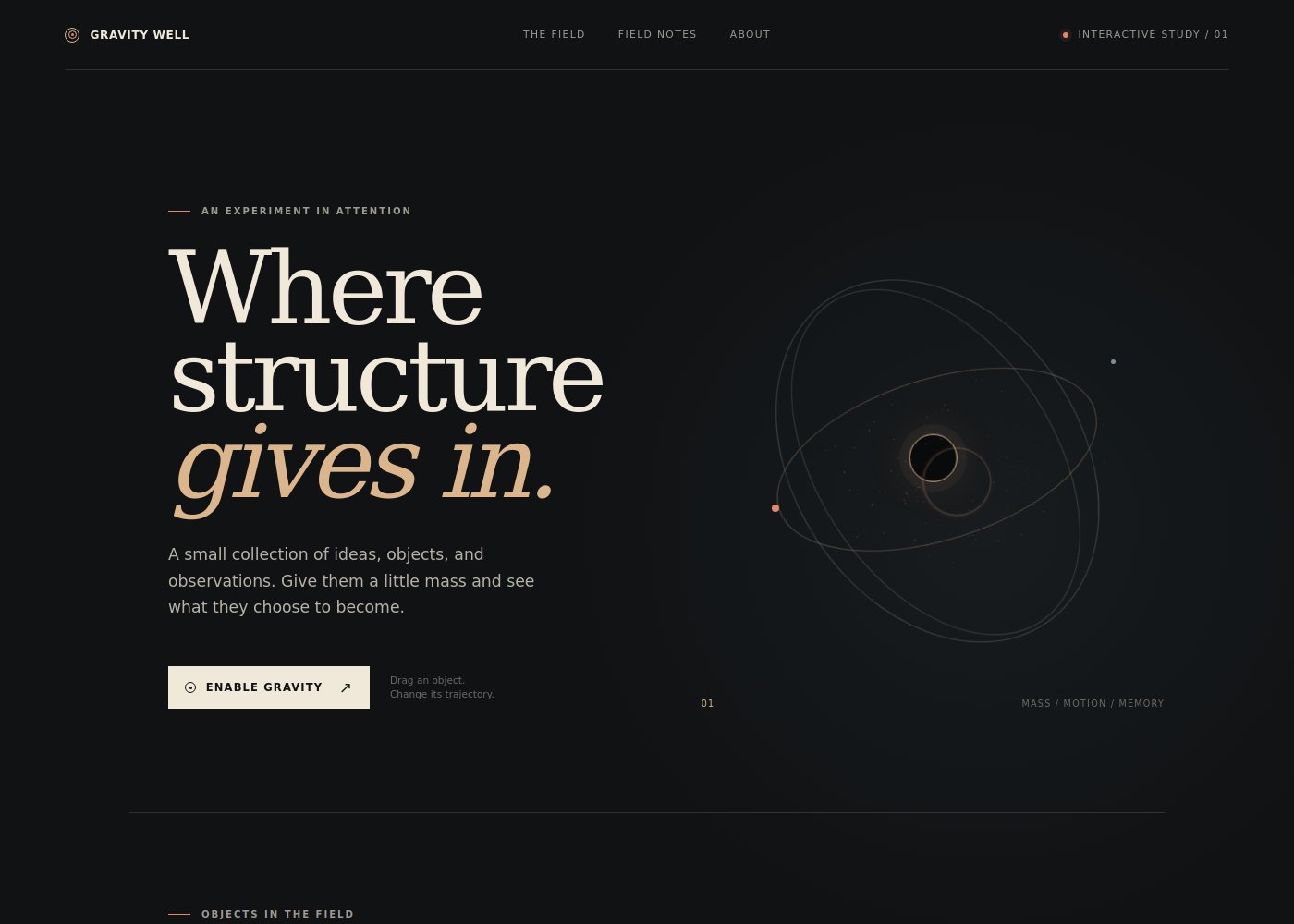
Gravity Well is a small, framework-free editorial interface. The page begins as a set of quiet cards, then turns those same cards into textured Three.js bodies moving through a softened gravitational field. The lifecycle is an explicit state machine: NORMAL, then TRANSITIONING, GRAVITY_ACTIVE, RESETTING, and back to NORMAL. Reset and the system controls sit outside the gravity set, so the interface can always recover. The README runs it locally with npm install and npm run dev, then the URL Vite prints.
The experiment: A calm page until gravity gets a vote. This explores letting an interface turn into a toy while keeping a way back to something usable.
Actual browser capture of the local project with gravity active. See the normal layout → Captured Oct 6, 2026.
Browser · Web Audio
Dial-Up Fun
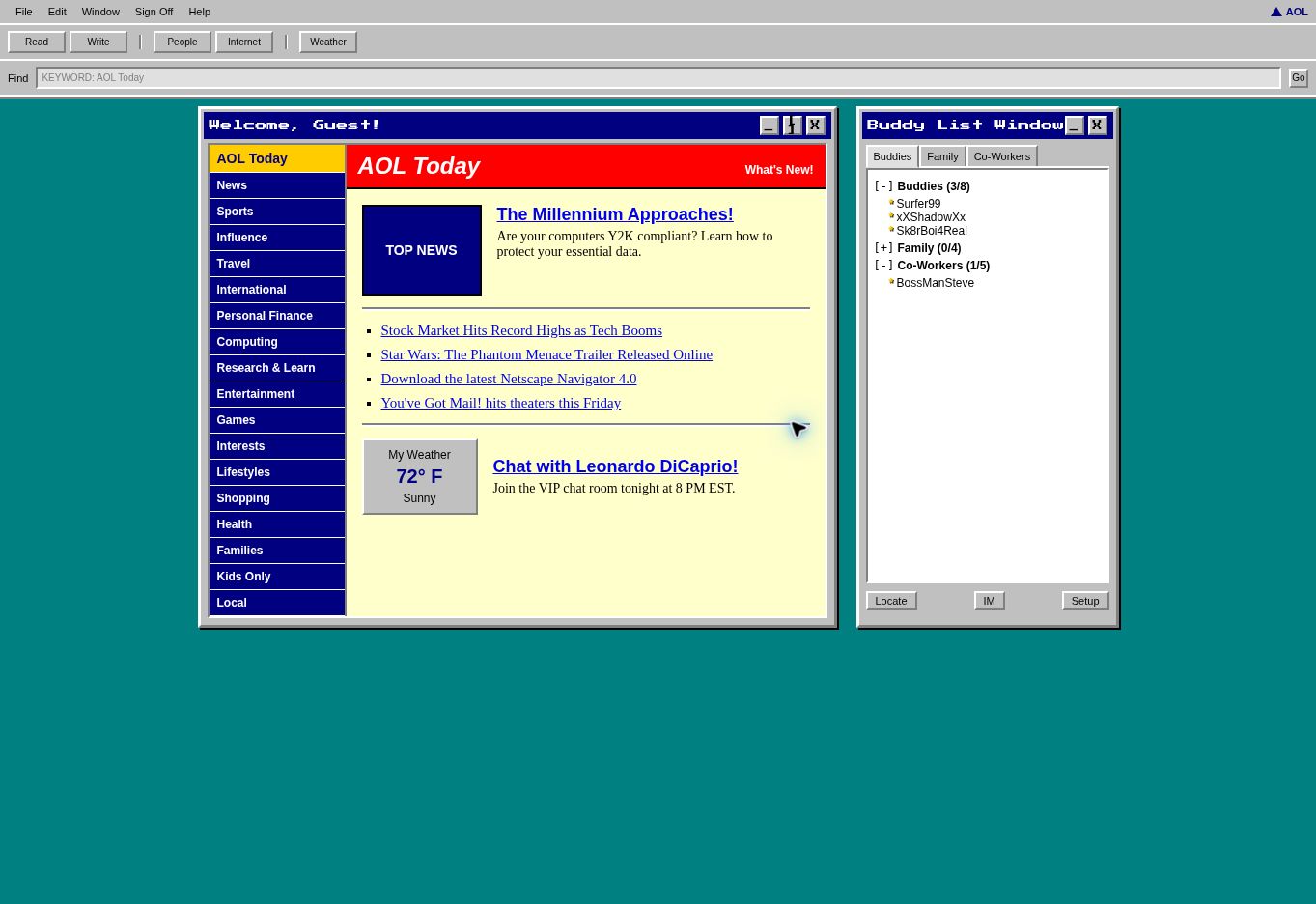
A lil retro AOL / Windows 95–style dial-up sign-on screen you can run in the browser. Connect starts a timed sequence: dial, DTMF tones, ringback, handshake and static, then connected. After that it reveals an AOL-inspired workspace with a toolbar, a channel list, a content feed, and a buddy list window. Status text updates along the way, and a three-panel activity animation cycles frames in CSS. The sounds are synthesized in the page with the Web Audio API, and they start only after that click. HTML, CSS, and vanilla JavaScript, with no build step.
The experiment: The sound is part of the interface. This explores how timing, synthesized audio, and a few familiar windows can bring back the feeling of signing on.
Real browser capture of the simulated AOL-style workspace after its connection sequence. Captured Oct 6, 2026.
Y2K · HTML, CSS, JavaScript
Y2K Oracle
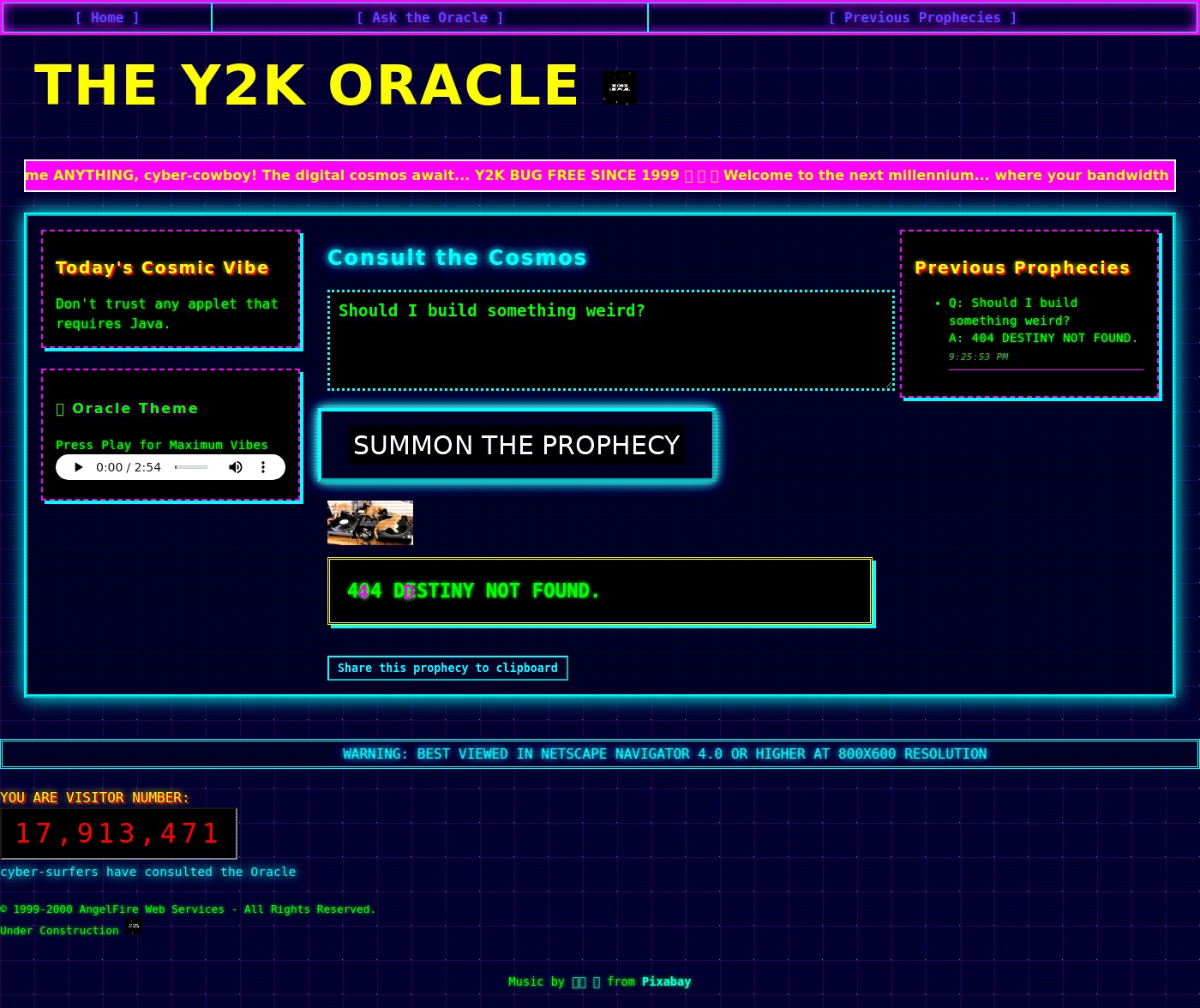
A nostalgic Y2K-themed oracle web app. You submit a question and receive a prophecy, in late-90s and early-2000s web clothes: CRT scanlines, neon text, glitch effects, and marquee scrolling. Prophecy history stays in the sidebar. The page also has a daily cosmic vibe, a retro background music player, a fake visitor counter, and a construction GIF. Markup is index.html with AngelFire-style tables and a Bootstrap grid; oracle.css and oracle.js hold the look and the interaction. The README describes the build as pure HTML, CSS, and JavaScript.
The experiment: A little oracle wearing its old-internet clothes. The experiment is in the whole page: type, motion, sound, and a history of the prophecies it gives you.
Actual browser capture of the local project after asking the oracle a question. Captured Oct 6, 2026.
AlphaGenome · GRCh38
Mutation Microscope
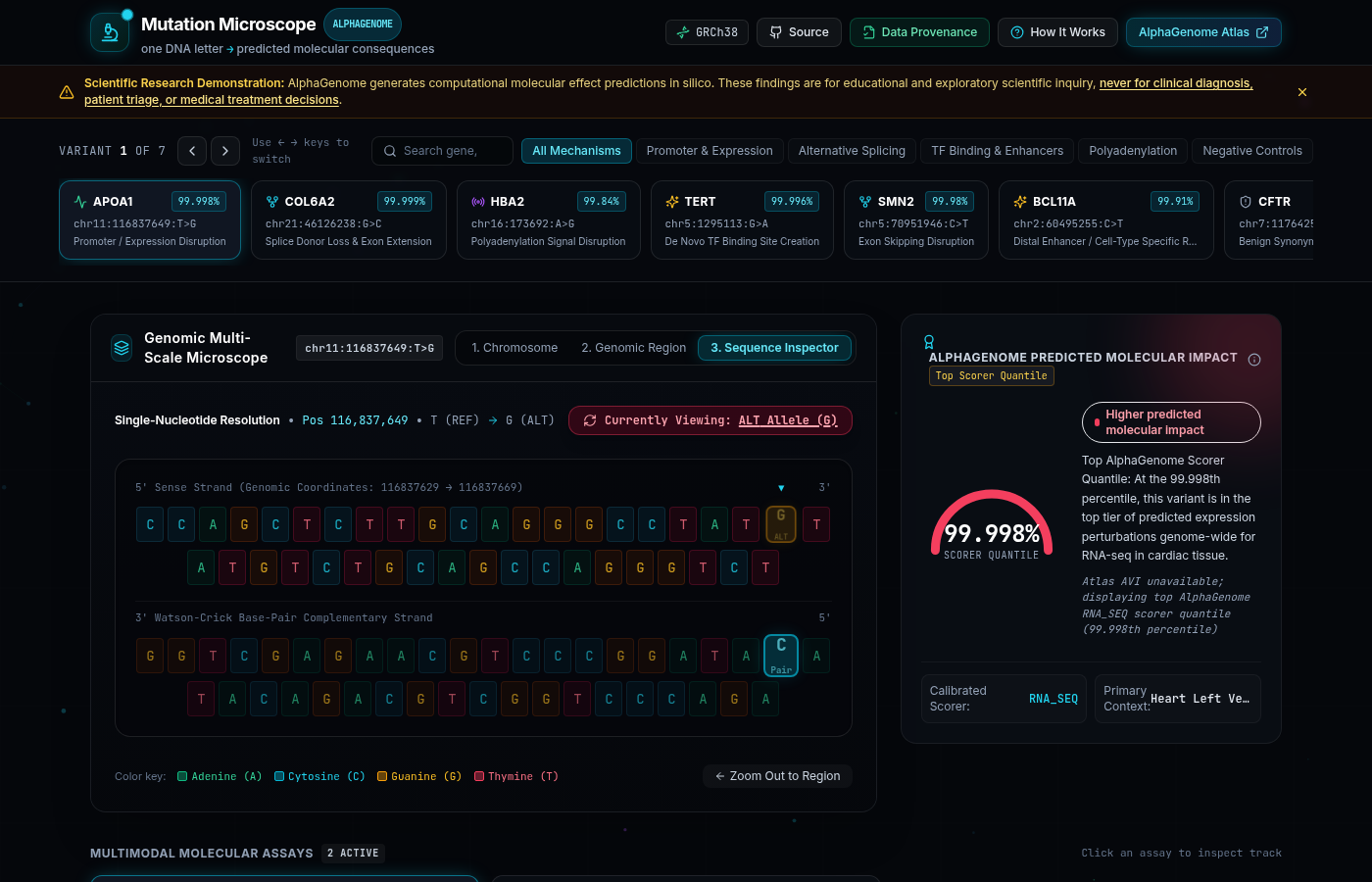
An interactive genomic observatory for visualizing, exploring, and understanding Google DeepMind AlphaGenome regulatory variant-effect predictions down to the single-nucleotide level in human genome GRCh38. The README separates the foundation model from this repo: AlphaGenome predicts the tracks, and Mutation Microscope is the interactive multi-scale visualizer, comparative analysis workspace, and scientific provenance engine. Zoom runs in three levels, from chromosome to gene body to a single base, with REF and ALT tracks side by side. The public app runs in the browser from committed static data and requires zero secrets.
The experiment: A pretty track is not enough. This explores how to zoom into model predictions and keep their source visible while comparing what changes.